Brilliance, patience and a pinch of gold: the beauty of Japanese lacquer
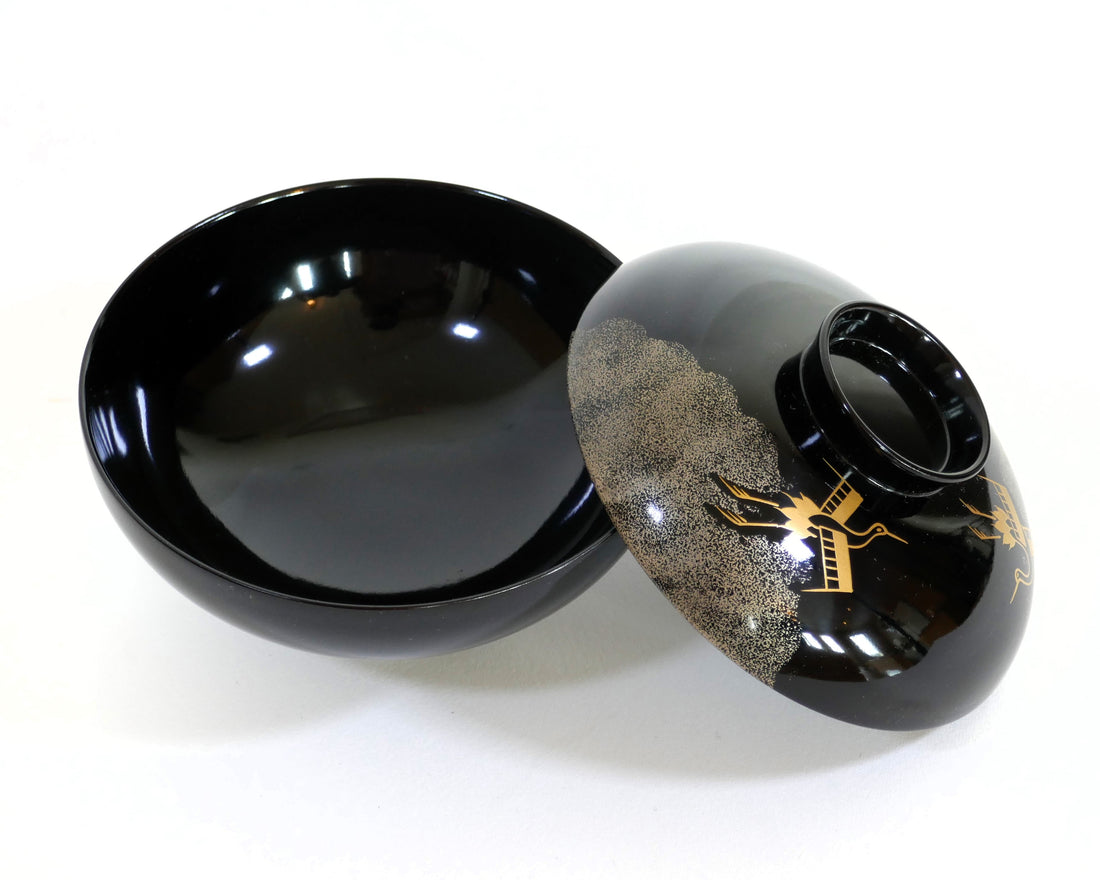
There are objects we love simply because they are beautiful. And then there are those with a soul . Those whose beauty comes from time , from repeated gestures , from the craftsman who polished, painted, waited, breathed with the object . That is Japanese lacquer. At Kogedo, we know it well. It covers delicate boxes , elegant bowls , and it tells a story that I will whisper to you, poko.
A very old story, very brilliant
It might not seem like it, but Japanese lacquerware is over 9,000 years old . It was originally used to protect wooden objects. And as is often the case in Japan, what protects... also ends up becoming very beautiful. Very, very beautiful, in fact. Over the centuries, artisans have refined the technique, turning it into an art form in its own right.
Urushi: a nail polish that doesn't mess around
Japanese lacquer, called urushi , is extracted from a Japanese tree (a type of sumac). From it, a precious, sticky sap (very sticky!) is extracted, which is applied in numerous, thin layers.
Making a lacquered object, summarized in Kogechan style:
- We collect the sap from the tree (be careful, it stings).
- The support is prepared: often wood, but sometimes fabric or even leather.
- The lacquer is applied in several layers, drying between each (and we wait... sometimes several weeks).
- And then, it's time for the decoration : gold, silver, mother-of-pearl, pigments... the object becomes a small work of art.
The whole thing can take months . But hey, it's like homemade ramen: the longer it takes, the better it tastes.
Styles and techniques to make your eyes shine
In Japan, every region has its own little secret. And every artisan has their own signature. Here are the most well-known (and most wow-inducing) techniques.
- Maki-e : Gold or silver powder sprinkled over the designs. Yes, sprinkled. Like icing sugar, but imperial version.
- Raden : small pieces of mother-of-pearl encrusted in the lacquer, for a luminous and dreamlike effect.
- Negoro-nuri : a red layer on black, which develops a patina over time. Like a print that ages beautifully.
The great lacquer regions (to visit one day, poko)
- Wajima (Ishikawa) : probably the most famous. Here, the lacquer is reinforced with fine earth powder to make it ultra-resistant.
- Kagawa : Known for the kinma technique, where patterns are engraved and then filled with bright colors.
- Aizu (Fukushima) : a region that adores poetic landscapes, birds, flowers... which are often found on their lacquered objects.
And what do we do with it?
Boxes , bowls , combs , trays , egg cups , mirrors ... in short, anything that deserves to shine a little more.
But at Kogedo, we have a soft spot for secret boxes , lacquered bowls and hair accessories .
Porcelain is classy. Lacquer is chic AND warm.
✨ Quick tip: how to pamper your hairspray?
It's beautiful, yes. But it likes to be taken care of.
- No direct sunlight, otherwise it becomes shy (it loses its colors).
- A soft cloth, without product, to clean it gently.
- And no thermal shocks. Neither too hot nor too cold. It's a bit like a cat: it likes comfort.
At Kogedo , we select our lacquered objects with love.
➡️ See our collection of lacquered tableware
&
Pssst… if you want a box or a comb that shines like a hidden treasure, it’s this way, poko 👉
"So much better a bowl of Japanese rice in a beautiful lacquered bowl, poko!" Kogechan